
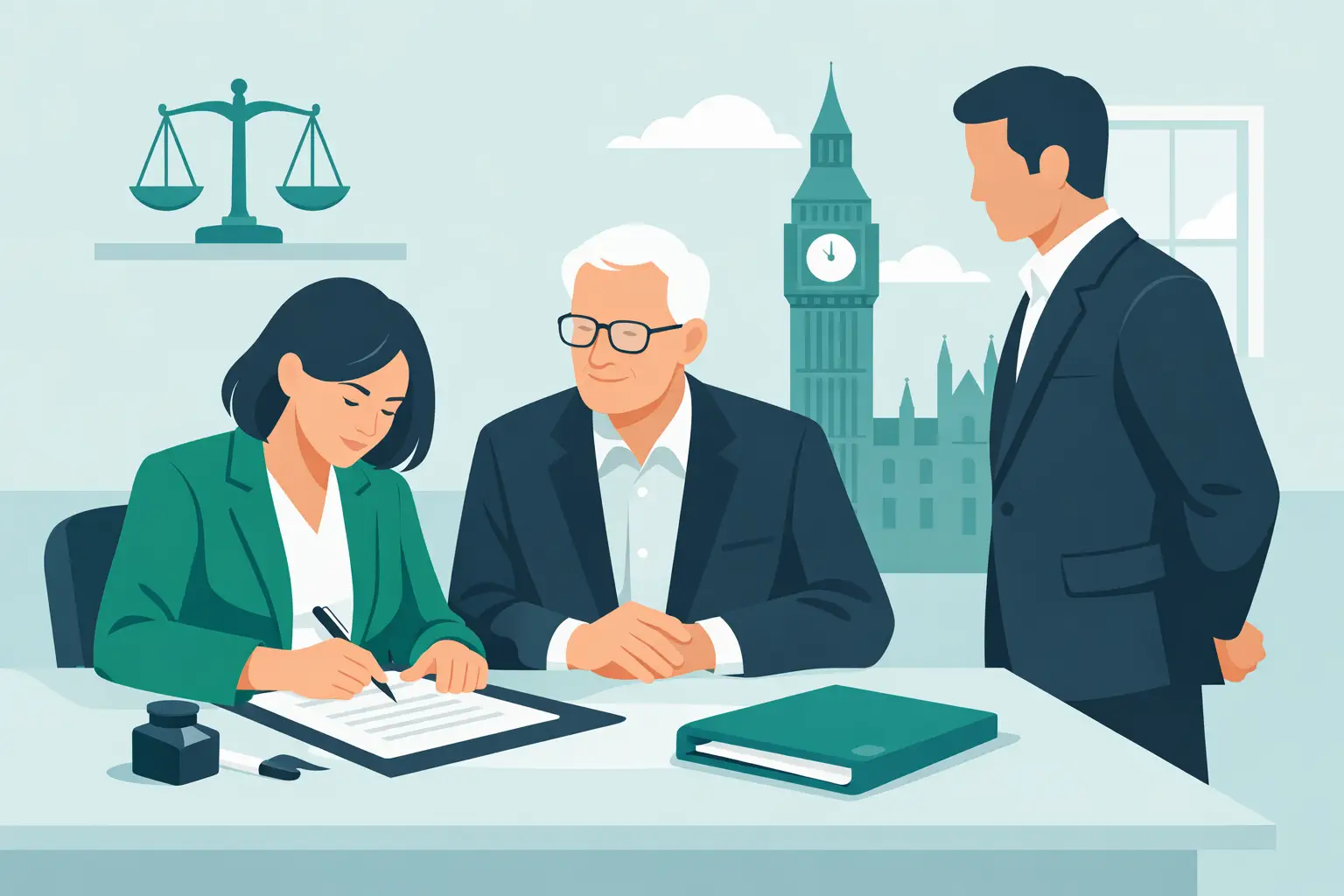
If you are ready to change your name, one of the easiest places to get stuck is the witness section. People often ask who can witness a deed poll because they do not want a simple signature mistake to cause problems later with their passport, driving licence, bank or employer.
The good news is that the rule is usually straightforward. In most cases, a deed poll witness should be an independent adult who is present when you sign the document. They are there to confirm that it was you who signed it. They are not approving your name change or making it legal by profession. They are simply witnessing your signature.
Who can witness a deed poll?
A deed poll can usually be witnessed by an adult aged 18 or over who is independent and not closely connected to the change itself. In practice, that means choosing someone who knows you or can act as a credible witness, but who is not your spouse, partner or a close family member.
The safest option is to ask someone with a stable professional or social standing, such as a neighbour, colleague, teacher, accountant or family friend. They do not normally need to be a solicitor. That point causes a lot of confusion, but for an unenrolled deed poll, a solicitor is not generally required.
What matters more is that your witness is impartial and available to sign at the same time as you. If the document is challenged or queried, you want the witness to be someone who can clearly say that they saw you sign it.
Who should not witness a deed poll?
This is where caution helps. Even if a person is over 18, they may still be a poor choice.
It is best to avoid asking your husband, wife, civil partner, boyfriend, girlfriend or anyone else living with you as a partner. Close relatives are also better avoided, including parents, children and siblings. A person who is also changing their name on the same set of documents should not act as the witness either.
The reason is simple. A witness should be independent. If the person signing is very closely connected to you, some organisations may see the witnessing as less reliable. Not every institution will object, but if you are updating important records, it makes sense to avoid any doubt from the start.
If you want the smoothest possible acceptance across official records, choose somebody clearly separate from your household and immediate family.
Does a deed poll witness need a certain job?
Usually, no. A witness does not need to be a solicitor, notary, judge or doctor just to make your deed poll valid.
That said, some people prefer to use a professional person because it feels more reassuring. There is nothing wrong with that, but it is not usually a legal requirement for a standard UK deed poll used to change your name with organisations such as banks, the DVLA or HM Passport Office.
The better question is not what job they do, but whether they are an adult, independent and physically present when you sign. A retired neighbour can be a better witness than a solicitor who did not actually see the signature happen.
Does the witness need to know me personally?
Not always, but it helps.
A witness is confirming the act of signing, not giving a character reference. So in strict practical terms, they do not need to have known you for years. However, using somebody who knows who you are can add credibility and avoid awkwardness if an organisation ever asks follow-up questions.
For most people, the simplest route is to ask someone sensible and independent who already knows them, even if only as a colleague, neighbour or family friend.
What does the witness actually do?
Their role is limited but important. They watch you sign your deed poll, then they sign it themselves to confirm they witnessed that signature. They will usually add their full name, address and occupation if the document asks for those details.
That is why timing matters. A witness should not sign a blank document in advance, and they should not sign later if they did not actually see you sign. If the signatures are not properly witnessed, the document may still cause questions when you try to update your records.
This is one of those areas where a small shortcut can create a bigger delay later.
Can a family member witness a deed poll?
People ask this a lot, especially if they want to sign the document quickly at home. Technically, some deed poll formats do not spell out a strict ban on every relative. But from a practical point of view, using a family member is rarely the best option.
A deed poll is meant to be a formal declaration. If your witness is your parent, sibling or adult child, some organisations may view that as less independent than they would like. You may still get acceptance, but you are increasing the chance of avoidable questions.
If you can choose a non-family witness instead, do that. It is a simple way to make your paperwork stronger.
Can my partner witness my deed poll?
No, this is best avoided.
Even where rules are explained loosely, a spouse or partner is not considered suitably independent for a deed poll witness. If you live together or share finances and personal affairs, their role is too closely tied to yours.
If you only have your partner available, it is still worth waiting and arranging for someone else to witness the signature properly. A short delay is better than having to redo the document later.
Who can witness a child deed poll?
For a child deed poll, the witness should again be an independent adult. The same common-sense rules apply. They should not be one of the people with parental responsibility who are signing the document, and they should ideally not be a close relative whose independence could be questioned.
Because child name changes can involve more scrutiny, especially where schools, GP records or passport applications are concerned, it is sensible to be even more careful with the witness choice. Pick someone clearly separate from the immediate family and make sure all signatures are completed correctly.
Common mistakes that cause problems
Most deed poll witness issues come down to simple avoidable errors rather than complicated legal points.
The most common problems are using a partner or close family member, asking someone to sign without seeing the document signed, leaving out witness details, or using inconsistent signatures across multiple copies. Another issue is rushing through the process and assuming any adult signature will do.
If your aim is quick acceptance by multiple organisations, details matter. A properly prepared deed poll with a suitable witness gives you far less to worry about when you start updating records.
How to choose the right witness without overthinking it
If you are unsure, keep it simple. Choose an adult over 18, make sure they are independent, and ask them to watch you sign before they add their own signature and details.
A neighbour, colleague, family friend or another trusted adult outside your immediate household is usually a sensible choice. You do not need to turn this into a formal legal appointment. You just need a witness who is appropriate, credible and actually present.
That balance matters. The process should feel simple, but it should still be done properly.
If you want your deed poll accepted first time
Most people changing their name are not worried about the theory behind a deed poll. They want a document that is clear, legally recognised and likely to be accepted without hassle. Choosing the right witness is part of that.
At Change My Name, the aim is to remove confusion from the process so you can move forward with confidence. Whether you are changing your name after marriage, divorce, for personal reasons or to reflect your identity, getting the witness section right helps everything else go more smoothly.
A good witness is not hard to find. They just need to be independent, over 18 and there when you sign. Once that is done properly, you can focus on the more important part – using your new name with confidence.