
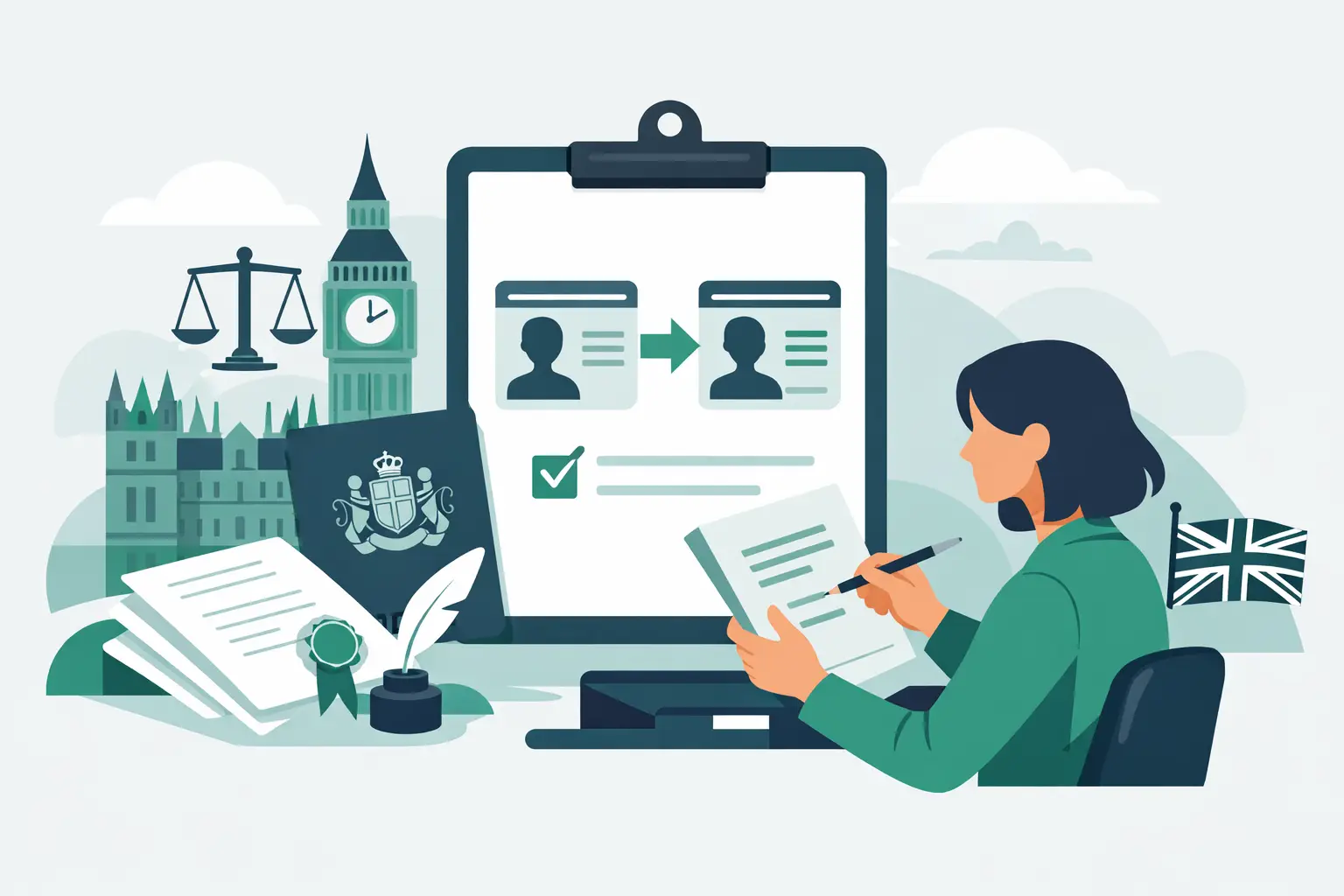
Changing your name often starts with a very personal reason, but the next question is usually practical: how to change name legally without getting lost in forms, delays or conflicting advice. The good news is that in the UK, the process is usually much more straightforward than people expect. In most cases, you do not need a solicitor, and you do not need to go to court just to start using your new name.
What matters is having the right document, completing it correctly, and then updating your records in the right order. Once you understand those steps, the process becomes much easier to manage.
How to change name legally: what the law actually requires
In the UK, a legal name change is usually handled through a deed poll. This is the document that shows you have given up your old name, adopted a new one, and intend to use it for all purposes going forward. It is widely accepted by organisations such as HM Passport Office, the DVLA, banks, employers and many other institutions.
People often assume there must be a complicated legal application behind it. In reality, for most adults, the key requirement is clear written evidence of your intention to use a new name consistently. A properly prepared deed poll provides that evidence.
There are a few situations where the process can feel more sensitive. If you are changing a child’s name, consent issues may need to be considered. If you are changing your name after divorce, marriage or separation, the document you need may depend on the exact change you want to make. If you are transgender or non-binary, the name change process itself is usually straightforward, even if other records involve additional steps later on.
The usual way to change your name
For most adults in the UK, the process works like this. First, you choose the exact new name you want to use. Then you prepare a deed poll document showing your old name, your new name and your declaration that you will use the new name from now on. Once the document is signed and witnessed correctly, you can start notifying organisations and asking them to update your records.
That is the point many people miss. Your deed poll is not the end of the process. It is the foundation that lets you change everything else.
A well-prepared deed poll should match the expectations of the organisations you need to deal with. That is why many people prefer a professionally prepared document rather than trying to draft one themselves. It reduces the risk of avoidable delays and gives you more confidence when sending it to official bodies.
Who can change their name this way?
Adults aged 16 and over can usually change their own name by deed poll. Parents or guardians can also arrange a child deed poll, although that process can involve extra consent requirements depending on who has parental responsibility. This is one of those areas where the details matter, because a child’s name change can be accepted or delayed based on family circumstances rather than the document alone.
There is also a difference between changing your title and changing your legal name. A deed poll changes your name. Titles are handled separately and are not always treated the same way by every organisation.
Choosing your new name carefully
Before you complete any document, decide exactly how you want your new name to appear. That includes spelling, middle names, spacing and whether you want a double-barrelled surname. Small inconsistencies can create extra work later, especially when you begin updating your passport, driving licence and bank records.
This is also the moment to think ahead. If your goal is to change every major record quickly, consistency matters more than people realise. One spelling on your deed poll and another on a form can slow things down.
Getting your deed poll prepared properly
If you are wondering how to change name legally with the least stress, this is the stage where most reassurance comes from. A deed poll needs to be clear, correctly worded and properly executed. It should contain your current name, your new name and your formal declaration that you have abandoned the old name for future use.
Once prepared, the document must be signed in the presence of witnesses. After that, you can use certified or original copies to update your records. Many people choose to order additional copies from the start because several organisations may want to see an original document rather than a photocopy.
Speed also matters. If you need to update travel documents, payroll records or school records quickly, same-day processing and tracked delivery can make a real difference. That practical support is often what turns a confusing job into a manageable one.
Where to update your name after the deed poll
After your deed poll is signed, you can begin notifying organisations. Most people start with photo ID and core government records, because those updates make everything else easier. Your passport and driving licence are often the first priorities, followed by HMRC, your bank, your employer, the NHS and any education providers.
If you are changing your name after marriage or divorce, some organisations may accept a marriage certificate or decree absolute for certain updates, but not always for every type of name change. A deed poll is often the clearest and most flexible option, especially if the name you want is not a direct return to a previous surname.
The order can vary depending on your circumstances. If you need to fly soon, your passport may come first. If payroll is the urgent issue, your employer and HMRC may be higher on the list. The process is not one-size-fits-all, but starting with your most important identification documents is usually sensible.
How to change a child’s name legally
Parents asking how to change name legally for a child need to approach the process with a little more care. A child deed poll can still be straightforward, but the legal position depends on parental responsibility and whether everyone who needs to consent has agreed.
That is why this is not simply an administrative formality. If there is disagreement between parents or guardians, extra steps may be needed before the change can go ahead. Where consent is clear, however, the process is usually simple and the deed poll can then be used to update school records, GP details and other official documents.
Common concerns people have
One of the biggest worries is whether organisations will accept the document. That concern is understandable, especially when your passport, bank account or driving licence is involved. In practice, a properly prepared deed poll is a legally recognised document used every day for exactly these updates.
Another common concern is privacy. Some people do not want a long, public or intrusive process. For many adults, deed poll offers a more straightforward route that keeps the focus on the practical change itself.
Then there is the emotional side. A name change can follow marriage, divorce, estrangement, family reasons or a gender identity transition. For some people it is simple life admin. For others, it carries real weight. The process should still feel clear, respectful and secure.
Avoiding delays when changing your name
Most delays happen for ordinary reasons: inconsistent spelling, missing signatures, incorrect witness details or sending the wrong type of copy to an organisation. It is worth checking every detail before you start posting documents.
It also helps to keep a written list of who you have contacted, what they asked for and when you sent it. That way, if one update depends on another, you can keep track without repeating work.
If you want the process to move quickly, using a trusted service can save time. Change My Name helps people complete the process with legally recognised deed poll documents, clear guidance and support that removes much of the uncertainty.
A practical way to move forward
If you have been putting this off because it sounds difficult, that is completely understandable. Legal paperwork often sounds more daunting than it is. But once you know how to change name legally, the path is fairly clear: choose your new name, prepare your deed poll correctly, sign it properly, and then update your records in a sensible order.
The right support does not just make the paperwork easier. It gives you confidence that your new name will be recognised where it matters most. And for something this personal, that confidence is often the part people value most.