
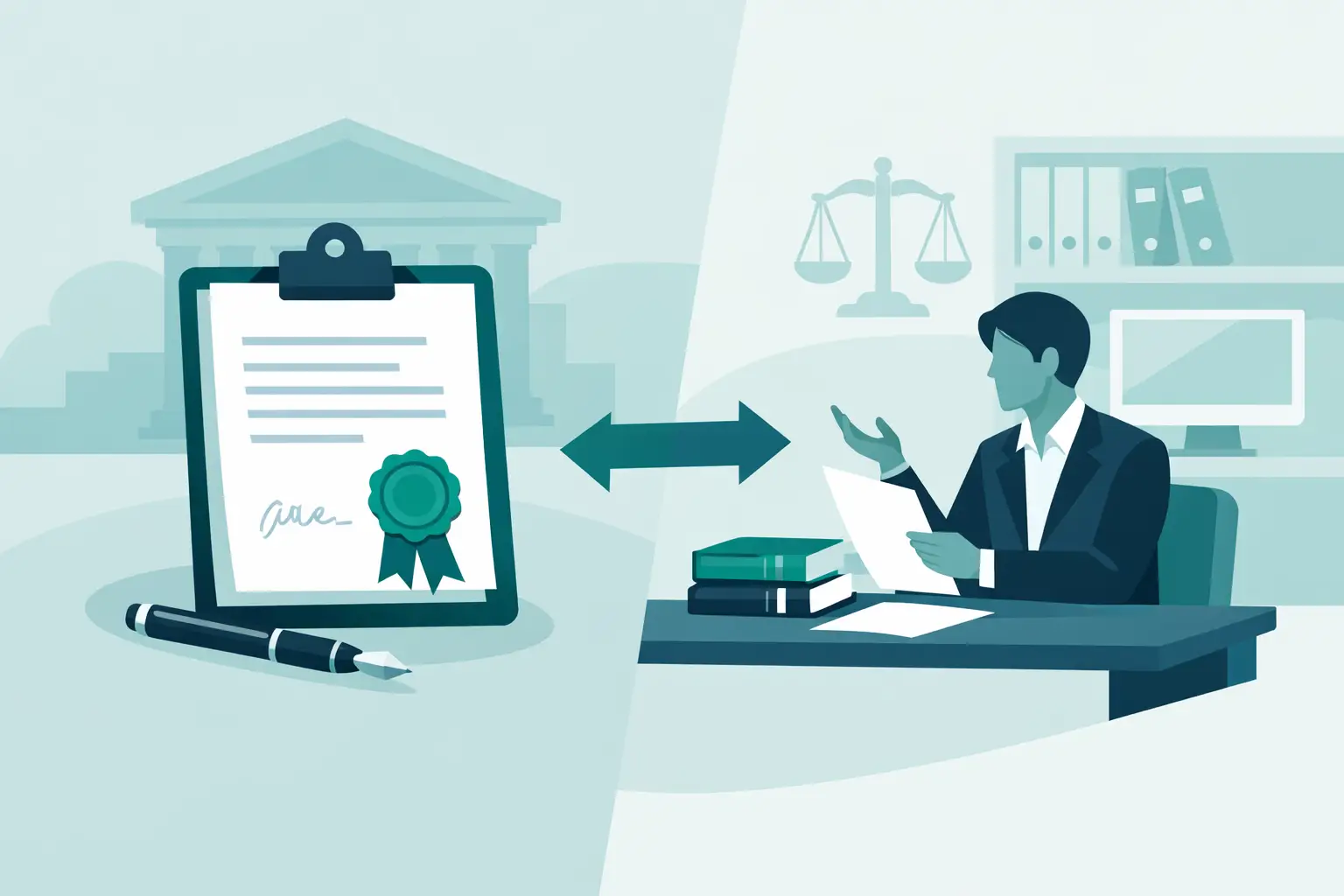
If you are wondering whether you need a deed poll or solicitor to change your name, the short answer is that most people do not need a solicitor at all. In the UK, changing your name is usually much simpler than people expect. The confusion tends to come from the paperwork that follows – updating your passport, driving licence, bank records and employer details – not from the legal act of changing your name itself.
That matters because many people delay the process for weeks or months, assuming it will involve legal appointments, expensive advice or formal court-style steps. In reality, for most adults and many child name changes, a properly prepared deed poll is the recognised document used to show your new name and start updating your records.
Deed poll or solicitor: what is the actual difference?
A deed poll is the legal document that records your intention to give up your old name and use a new one for all purposes. It is the document most organisations expect to see when you update official records. A solicitor, by contrast, is a legal professional. They are not the thing that changes your name. At most, they may witness, certify or advise on paperwork in certain situations.
This is the key point people often miss. The question is not really whether a deed poll and a solicitor are alternatives of equal weight. A deed poll is the document you use. A solicitor is only someone you might involve if your circumstances make that helpful.
For a straightforward name change, most people can complete the process without hiring a solicitor. That is one reason online deed poll services have become such a practical option – they remove the uncertainty while keeping the process fast and affordable.
When a deed poll is usually enough
If you are an adult changing your name by personal choice, after a divorce, after a family change, or to better reflect your identity, a deed poll is normally the document you need. Once signed and witnessed correctly, it can be used to update a wide range of records.
That commonly includes your passport, driving licence, bank accounts, HMRC records, NHS records, employer details and education records. The focus for these organisations is usually not whether a solicitor was involved, but whether the deed poll is properly prepared and contains the details they need.
For many people, the best route is simply to obtain a legally recognised deed poll document and then work through each organisation one by one. That is far more straightforward than trying to turn a basic administrative process into a legal matter that requires professional representation.
When might a solicitor be useful?
There are situations where legal advice can be helpful, but they are usually the exception rather than the rule. If there is a dispute about parental responsibility in a child name change, if you are dealing with complex international paperwork, or if another legal issue sits alongside the name change, a solicitor may be worth speaking to.
The same applies if you are unsure how your name change interacts with court orders, immigration matters or formal identity disputes. In those cases, the solicitor is not replacing the deed poll. They are helping you navigate the wider legal circumstances around it.
That distinction can save you time and stress. If your situation is routine, paying for legal advice may add an unnecessary step. If your situation is unusual, specialist advice may prevent problems later. It depends on whether the complexity is about the name change itself or about another legal issue happening around it.
Why people assume they need a solicitor
Name changes feel official because they affect so many important records. People understandably think that anything involving a passport, DVLA or bank must begin with a solicitor. But UK name change practice is more accessible than that.
A lot of the anxiety comes from three common misunderstandings. First, people think the process must be approved by a solicitor to be valid. Second, they assume a legal professional is needed because the document sounds formal. Third, they worry that institutions will reject anything that was prepared outside a solicitor’s office.
In practice, what matters is that the document meets the expected format and is presented correctly. A trusted deed poll provider can help with that by preparing the paperwork clearly and giving you guidance on how to use it.
Is an unenrolled deed poll legally recognised?
Yes, in most everyday cases an unenrolled deed poll is the standard route. It is widely used by people changing their name and is commonly accepted by major institutions when completed properly.
People sometimes come across the idea of enrolling a deed poll or involving a solicitor and assume those steps are mandatory. They are not mandatory for most name changes. In fact, many people prefer the privacy and simplicity of an unenrolled deed poll because it allows them to update their records without going through a more formal public process.
If your priority is to change your name quickly, securely and with minimal fuss, an unenrolled deed poll is usually the practical choice.
Deed poll or solicitor for a child’s name change
This is one area where people should be more careful. A child name change can still be straightforward, but consent and parental responsibility matter. If everyone with parental responsibility agrees, a child deed poll is often the correct route.
Where people run into difficulty is when there is disagreement between parents or uncertainty about who must consent. That is where legal advice may become useful. Not because a solicitor is normally required for every child name change, but because disputes around parental rights need to be handled properly.
If there is no dispute, the process can be much more manageable than many parents expect. Clear documentation and the right supporting guidance make a big difference.
What institutions usually care about
Most organisations are not looking for you to prove that you hired a solicitor. They want confidence that your name change is genuine, documented and consistent across your records.
That means the practical side matters. Your deed poll should be accurate, easy to read and formally set out. You should use the same new name consistently. And when you contact each organisation, you should follow their document requirements carefully.
This is why support matters as much as the document itself. A good service does not just provide paperwork. It helps you understand what to do next, which is often the part that feels most overwhelming.
Choosing the simplest route with confidence
For most people, the choice between deed poll or solicitor comes down to this: if your name change is straightforward, a deed poll is usually all you need. If there is a separate legal complication, a solicitor may help with that complication.
That is an important difference because it puts the focus back on what most people actually need – a trusted, legally recognised document and a clear process for updating records. Not legal jargon. Not unnecessary appointments. Not extra cost for the sake of formality.
At Change My Name, the aim is to make that process feel secure and manageable, with clear guidance and documents designed to meet the expectations of major UK institutions. For many people, reassurance is just as valuable as speed.
The better question to ask
Instead of asking whether you need a solicitor, ask whether anything about your situation is legally disputed or unusually complex. If the answer is no, a deed poll is likely to be the right place to start.
That can be a real relief, especially if your name change carries personal significance. Whether you are updating documents after divorce, taking a new family name, or aligning your records with your identity, the process should feel respectful and straightforward.
A name change is a personal decision, but the paperwork does not have to be a battle. Often, the fastest path is also the simplest one – a properly prepared deed poll, used with confidence, and supported by clear next steps.