
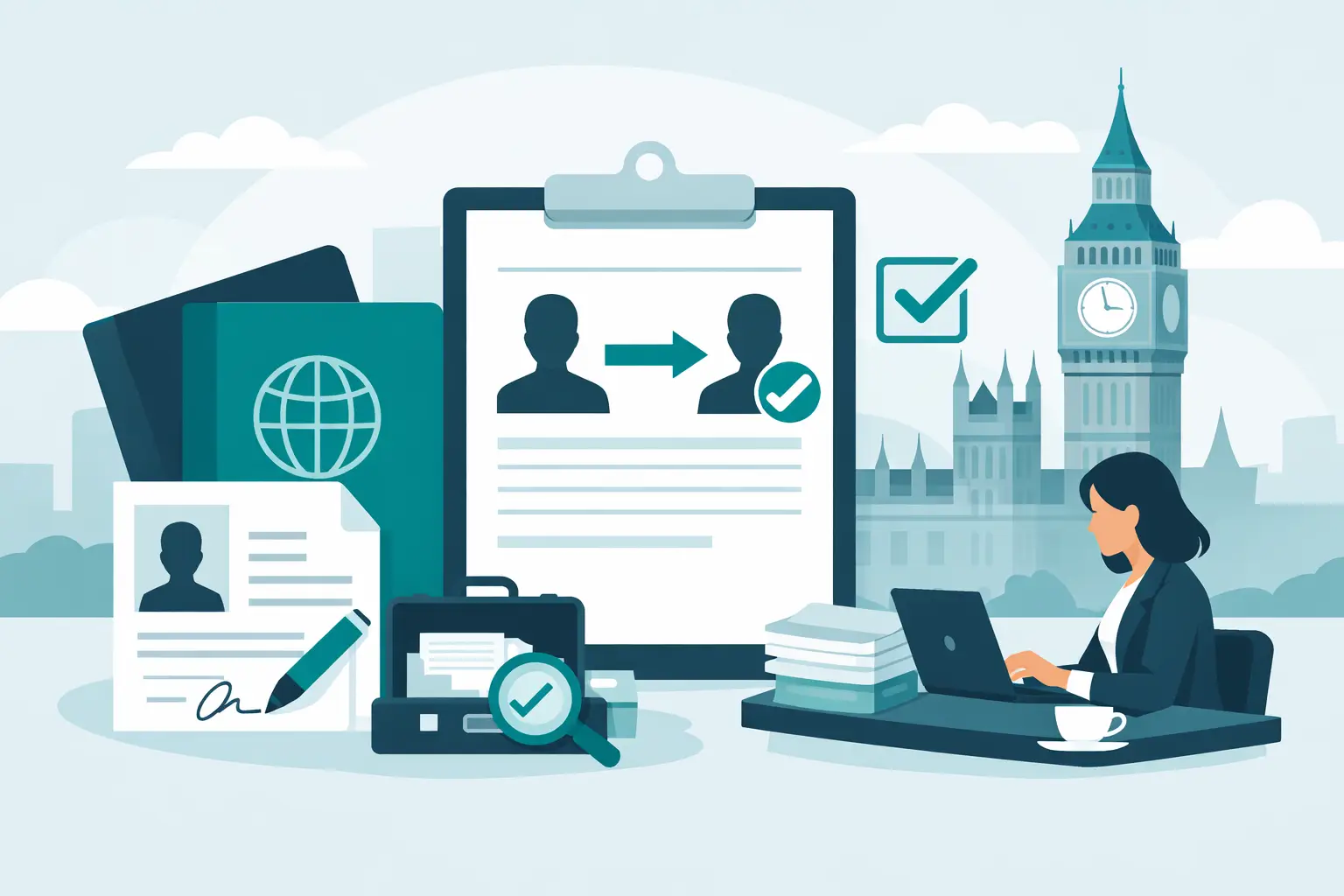
If you have changed your name and your passport still shows the old one, it can quickly become more than a paperwork issue. Booking travel, proving your identity, or matching records with your bank and driving licence can all become harder than they need to be. If you are wondering how to update passport name details, the good news is that the process is usually straightforward once you have the right documents in place.
For most people, the key step is proving that the name change is legally recognised. In the UK, that often means using a deed poll, although some people will update their passport after marriage or divorce using different supporting documents. What matters most is that HM Passport Office can clearly see your old name, your new name, and the evidence connecting the two.
How to update passport name after a name change
A passport name change is not usually treated as a small amendment. In most cases, you apply for a new passport in your new name and submit evidence of the change along with your application. That means you should expect to go through the standard passport renewal or replacement process rather than asking for a simple correction.
If you changed your name by deed poll, you will usually need to send the deed poll document with your application. If your change happened because of marriage or civil partnership, you may be able to use your marriage or civil partnership certificate instead. If you are reverting to a previous name after divorce, there may be a little more nuance. Some people can use a combination of divorce documents and proof that they are using the new name, while others prefer a deed poll because it creates a clearer paper trail.
This is where many applicants get stuck. The passport office is not just checking that your new name exists. It is checking that your identity documents support each other and that your current name is the one you are genuinely using.
What documents do you need?
The exact documents depend on why your name changed, but the principle stays the same. You need evidence of your identity and evidence of the name change.
If you have changed your name by deed poll, you will generally need your current or expired passport, your deed poll, and a completed passport application. Depending on your circumstances, HM Passport Office may ask for additional documents, especially if your appearance has changed significantly or if they need more evidence to confirm your identity.
If your name changed after marriage or civil partnership, your certificate may be accepted as the name change document. If the certificate does not clearly support the name you now want to use, or if your situation is more personal than that standard route allows for, a deed poll can often make things simpler.
For children, the process can involve extra checks. Consent, parental responsibility, and supporting evidence matter more, so it is worth making sure the paperwork is complete before applying. A child passport name change is not always difficult, but it does tend to be more document-sensitive than an adult application.
Deed poll and passport applications
A deed poll is one of the most widely used documents for changing your name in the UK because it gives organisations a clear, legally recognised record of your old name and your new one. For passport purposes, clarity matters. A properly prepared deed poll helps remove uncertainty and makes it easier for official bodies to update their records.
That does not mean every deed poll is identical in practice. The wording, presentation, and supporting guidance can make a real difference when you are dealing with multiple organisations. If you are updating your passport alongside your driving licence, bank records, HMRC details, and employer records, you want documents that are easy to use and widely accepted.
That is one reason people often choose a specialist provider such as Change My Name. The aim is not to make the process feel legalistic. It is to make it feel clear, fast, and trusted, with documents designed to be accepted by the institutions that matter.
How the passport application process usually works
Once you have your name change document ready, you can complete the passport application in your new name. You will need to provide your personal details, declare your previous name where required, and submit the supporting evidence that explains the change.
At that stage, attention to detail matters. Your new name should be written consistently across all supporting paperwork. If one document uses a middle name and another leaves it out, or if spellings vary slightly, that can create delays. These are small issues on paper, but they can slow down an application if the passport office needs clarification.
You should also think about timing. If you have travel booked soon, do not leave the update until the last minute. Your old passport may still be valid for identity in a general sense, but if the name on your booking does not match the passport exactly, that can cause serious problems when you travel.
How long does it take to update passport name details?
Processing times can vary depending on demand, the type of application, and whether HM Passport Office needs more information. A straightforward application with clear supporting documents is obviously easier to process than one with inconsistent records or missing evidence.
The most helpful way to think about timing is this: the passport application itself takes however long the passport office says it takes at that moment, but you can control how prepared you are before you apply. If you already have your deed poll, supporting ID, and any extra evidence ready, you reduce the risk of avoidable delays.
For people in a hurry, the real time saving often happens before the passport application begins. Getting your name change document sorted quickly and correctly means you can move on to the passport stage with confidence.
Common reasons applications are delayed
Most delays come down to missing or inconsistent documents rather than the name change itself. If your deed poll is not included, if your application uses a different version of your name from the evidence provided, or if the passport office cannot clearly follow the change from old name to new name, your application may be paused.
Another common issue is trying to update some records but not others. This is not always a formal barrier, but it can create confusion. If your bank, payslips, and driving licence still use your old name while your passport application uses the new one, you may be asked for more evidence that you are genuinely using the updated name.
That does not mean you must change everything in a rigid order. In practice, people often update records gradually. But it does help to think strategically. Once your deed poll is in place, updating your most important identity records promptly can make the rest much easier.
How to update passport name if your situation is more complex
Some cases are not neatly covered by a marriage certificate or a straightforward deed poll application. This can include reverting to a former name, changing a child’s name, changing multiple parts of your name at once, or updating documents after a transition.
In these situations, the process is still manageable, but precision becomes more important. You may need a clearer paper trail, extra supporting documents, or stronger evidence that the new name is now your settled name for official purposes. This is where simple, legally recognised documentation is especially valuable because it reduces the chance of having to explain your circumstances repeatedly.
For transgender and non-binary applicants, having documents that reflect your identity accurately is about far more than administration. It is about dignity, consistency, and being able to use your ID without stress. A deed poll is often the simplest route to establishing that consistency across your passport and other records.
What to do after your passport is updated
Once your new passport arrives, use it as part of the wider process of bringing your records into line. Your passport is one of the strongest forms of ID you have, so having it in your correct name can make updates elsewhere much smoother.
This is usually the point to check your driving licence, bank accounts, employer records, HMRC details, GP surgery, and any education or professional records that still show your old name. You do not need to do everything in one afternoon, but keeping your documents aligned will save time and reduce stress later.
If you are at the start of the process, the smartest move is often to get your name change document sorted first, then work through your core ID records in a sensible order. That way, each update supports the next one.
Changing your name is personal, but updating your passport does not have to be difficult. With the right documents and a clear paper trail, it becomes a practical step forward rather than another source of uncertainty. Once your passport reflects your correct name, everything else tends to feel much more settled.