
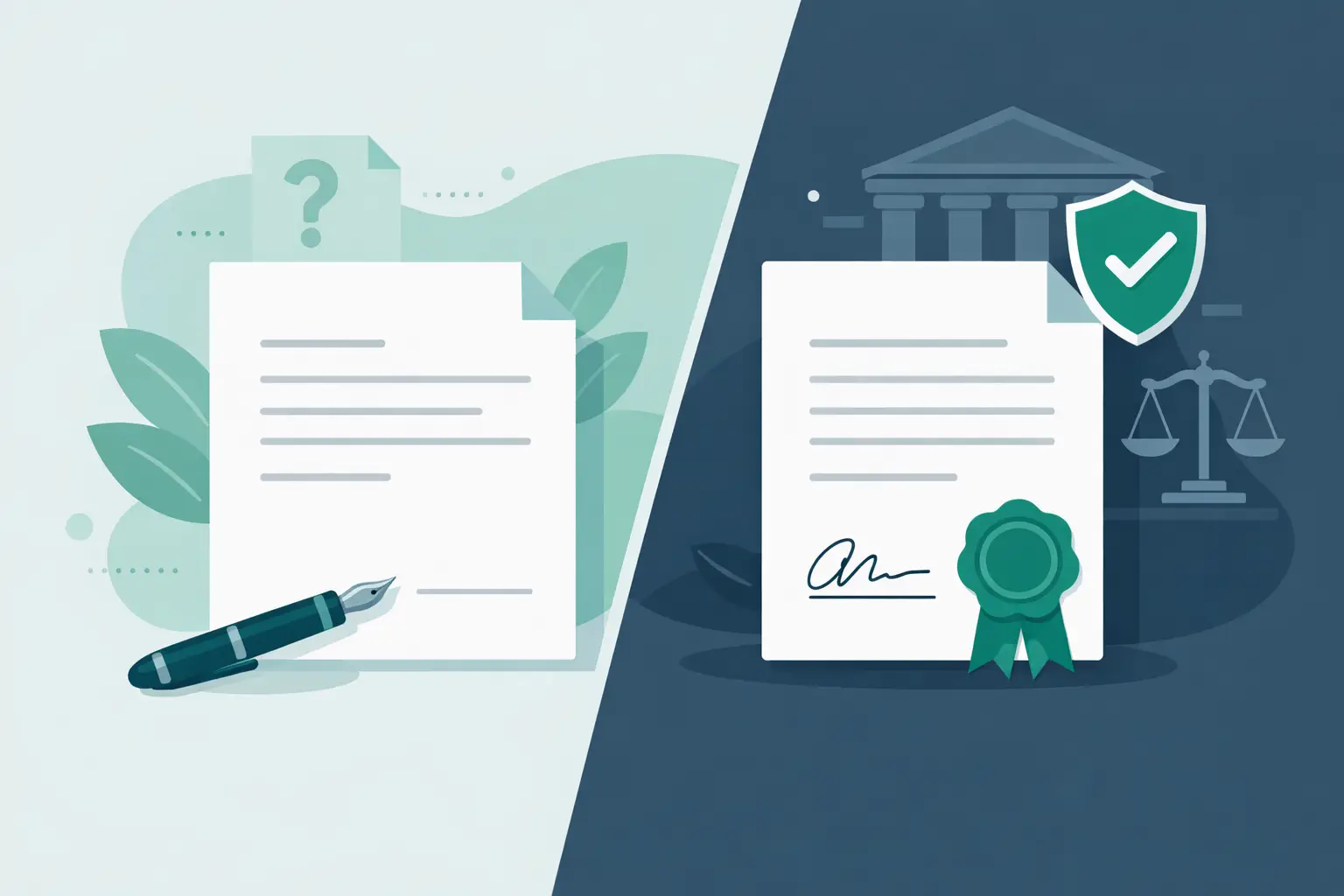
If you are comparing an unenrolled vs enrolled deed poll, the key question is usually not which one sounds more official. It is which one you actually need to change your name with confidence, without adding cost, delay or unnecessary complexity.
For most people in the UK, an unenrolled deed poll is the straightforward and practical option. It is legally recognised for changing your name and is widely accepted by the organisations people usually need to update, including passport, driving licence, bank, employer and GP records. An enrolled deed poll exists too, but it serves a different purpose and comes with trade-offs that many people do not realise at first.
Unenrolled vs enrolled deed poll: what is the difference?
An unenrolled deed poll is a legal document you use to declare that you have given up your old name and will use your new one for all purposes. It does not need to be registered with a court for it to be valid. In practice, this is the route most people take because it is simpler, faster and more private.
An enrolled deed poll is a deed poll that is officially recorded through the courts. That means your change of name becomes part of a public record. Some people assume this makes it more legally effective, but that is where confusion often starts.
The important point is this: enrolling a deed poll does not make your name change more legal than an unenrolled deed poll. In general, both can be used to support an official name change. The difference is mainly about registration, privacy and process.
Is an enrolled deed poll more official?
It may feel that way because it involves a formal court process, but more official does not necessarily mean more useful.
In the UK, a deed poll does not need to be enrolled to be legally recognised. Many major institutions accept unenrolled deed polls as standard evidence of a name change. For most adults, that is enough to update records across daily life.
This matters because people often worry that they need the most formal option available in order to avoid rejection. In reality, acceptance usually depends on whether your deed poll is properly prepared, clearly worded and supported by any other documents an organisation may require for its own checks. It is not usually about whether the deed poll was enrolled.
That is why a professionally prepared unenrolled deed poll is often the best fit. It gives you the document you need without creating extra steps that do not improve the outcome.
Why most people choose an unenrolled deed poll
The biggest reason is simplicity. If you want to start using your new name and update your records quickly, an unenrolled deed poll is usually the fastest route. You can get the document prepared correctly, sign it with witnesses and begin notifying organisations.
Privacy is another major factor. An enrolled deed poll creates a public record of your name change. That may not matter to everyone, but for many people it does. If you are changing your name after divorce, for family reasons, for personal choice, or as part of affirming your gender identity, keeping that change out of a public register can be very important.
There is also the question of practicality. Most people are not looking for a court record. They simply want a legally recognised document that lets them update their passport, driving licence, bank details, workplace records and other accounts without stress.
When might someone consider an enrolled deed poll?
There are situations where a person may still choose enrolment, usually because they prefer the added formality of a public court record. Some people feel reassured by that process, even though it is not generally necessary.
That said, it is worth thinking carefully before going down that route. Once details are placed on a public record, privacy is reduced. That can be a serious concern for transgender people, those leaving difficult family situations, or anyone who does not want their previous name easily traceable.
For children, the issue can be even more sensitive. Parents considering any formal name change process for a child should be especially cautious about public records, consent requirements and the child’s long-term privacy.
So while enrolled deed polls exist, they are not the default choice for most name changes. In many cases, they solve a problem that the person did not really have in the first place.
Privacy matters more than many people expect
When weighing up unenrolled vs enrolled deed poll options, privacy deserves more attention than it often gets.
An unenrolled deed poll stays with you and the organisations you choose to notify. An enrolled deed poll involves publication and public registration. That difference can affect your comfort, safety and sense of control over your own information.
For some people, this is not just a preference. It is essential. If your name change is tied to identity, personal history or a need to move on from a previous chapter of life, public visibility may feel intrusive rather than helpful.
A name change is not only an administrative task. It can also be deeply personal. The process should support that, not undermine it.
Will banks, passport offices and the DVLA accept an unenrolled deed poll?
In most cases, yes. A properly executed unenrolled deed poll is widely accepted across the organisations people commonly need to update. That includes government bodies and private institutions, though each organisation may have its own document checks and identity requirements.
This is where people benefit from using a deed poll that is clearly drafted and prepared with those real-world checks in mind. The wording, layout and supporting guidance can make the process smoother, especially when you are updating several records at once.
It is also sensible to remember that acceptance is not only about the deed poll itself. Some organisations may ask for proof of address, photo identification or original documents rather than copies. That does not mean your deed poll is insufficient. It just means the organisation is following its own verification process.
Which option is better for speed and ease?
If speed matters, an unenrolled deed poll is usually the better option. You do not have to wait for a court registration process, and you can normally begin updating your records much sooner.
That can make a real difference if you need your new name reflected quickly for work, travel, banking or day-to-day identification. It also reduces the emotional drag that often comes with a long administrative process. When people decide to change their name, they usually want the paperwork to catch up with real life as soon as possible.
An enrolled deed poll, by contrast, is slower and more involved. If there is no clear benefit for your situation, that extra delay may simply add frustration.
The real question: what do you need your deed poll to do?
This is the most useful way to decide.
If you need a legally recognised document to prove your new name and update your records, an unenrolled deed poll is usually enough. If you specifically want your name change recorded on a public register and understand the privacy implications, then enrolment may be something to consider.
For most people, the practical goal is simple. They want a trusted document that is accepted by the institutions that matter, without making the process harder than it needs to be.
That is why the unenrolled route is so often the right one. It aligns with what people actually need: legal recognition, broad acceptance, privacy, speed and reassurance.
Unenrolled vs enrolled deed poll: the choice most people make
Once the difference is clear, the decision often becomes much easier. An enrolled deed poll is not a stronger version of an unenrolled one. It is simply a different process with public registration attached.
For most adults changing their name in the UK, and for many parents handling a child’s name change, an unenrolled deed poll is the more sensible and proportionate option. It avoids unnecessary bureaucracy while still giving you a legally recognised basis for updating your records.
If you want the process handled clearly and correctly, Change My Name provides professionally prepared deed poll documents designed to meet the expectations of major UK organisations, with guidance that helps you move from uncertainty to action quickly.
A name change should feel like a step forward, not a legal maze. The best choice is usually the one that gives you certainty, protects your privacy and lets you start living under your new name without delay.